Malaysia has become one of Asia’s most popular destinations for foreign workers seeking stable employment and better income opportunities. With a growing economy, modern infrastructure, and strong demand for labor across multiple industries, the country continues to attract workers from South Asia, Southeast Asia, Africa, and beyond.
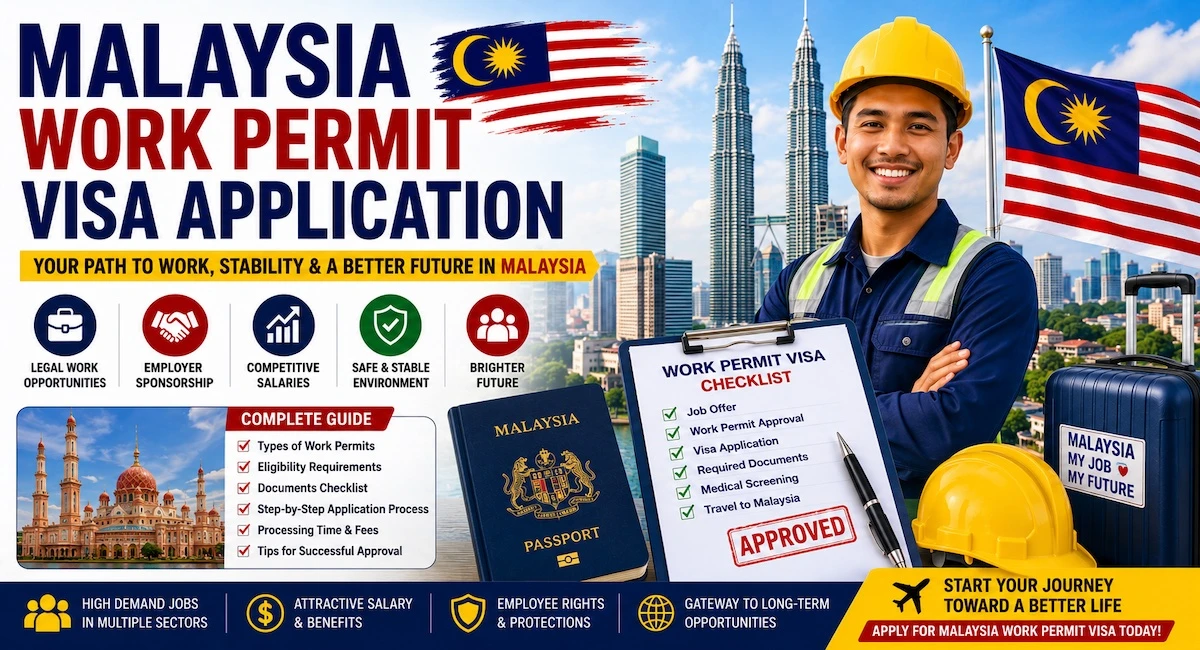
Whether you are interested in factory work, construction, hospitality, caregiving, engineering, or information technology, understanding the Malaysia Work Permit Visa application process is essential before making your move.
This comprehensive guide explains everything you need to know about obtaining a Malaysia Work Permit Visa, from eligibility requirements and documentation to salaries, processing times, and practical tips for success.
Why Foreign Workers Choose Malaysia
Consider the story of Karim, who spent years working temporary jobs in his home country. Looking for a better opportunity, he applied for a manufacturing position with a Malaysian electronics company.
After receiving a job offer and completing the visa process, Karim moved to Malaysia. Within months, he was earning a stable income, gaining international work experience, and sending financial support to his family back home.
Karim’s experience reflects the reality of thousands of foreign workers who move to Malaysia every year in search of better employment opportunities.
Several factors make Malaysia attractive:
- Strong economic growth
- Competitive salaries
- Relatively low living costs
- Safe working environment
- Diverse multicultural society
- Growing demand for foreign labor
- Modern transportation and infrastructure
Malaysia hosts millions of foreign workers who contribute significantly to the country’s economy, especially in labor-intensive industries.
Understanding the Malaysia Work Permit Visa
A Malaysia Work Permit Visa allows foreign nationals to live and work legally in Malaysia for an approved employer.
Unlike some countries where workers can independently apply for work permits, Malaysia’s system is generally employer-driven. In most cases, a Malaysian company must sponsor the foreign worker and submit the required applications to immigration authorities.
The visa category depends on:
- Type of employment
- Salary level
- Professional qualifications
- Industry sector
- Duration of employment
Types of Work Permits in Malaysia
Malaysia offers several work authorization categories.
Employment Pass
The Employment Pass is designed for highly skilled foreign professionals.
Typical occupations include:
- Engineers
- Software developers
- Managers
- Accountants
- Architects
- Consultants
Employment Pass holders often receive longer validity periods and additional benefits.
Temporary Employment Pass
This permit is commonly issued to workers in sectors such as:
- Manufacturing
- Construction
- Agriculture
- Plantation work
- Services
It is one of the most widely used work permits for foreign labor.
Professional Visit Pass
This pass is intended for short-term professional assignments.
Examples include:
- Technical experts
- Trainers
- Consultants
- Specialists providing temporary services
Dependent Pass
Eligible family members of certain Employment Pass holders may accompany them through dependent permits.
Why Malaysia Needs Foreign Workers
Malaysia’s economy relies heavily on foreign labor.
Several industries face labor shortages because local workers are often unavailable or unwilling to fill certain positions.
High-demand sectors include:
Manufacturing
Malaysia is a major exporter of electronics and industrial products.
Factories frequently hire:
- Production operators
- Machine technicians
- Assembly workers
- Quality inspectors
Construction
Rapid urban development creates demand for:
- Carpenters
- Electricians
- Welders
- General laborers
Hospitality
Hotels, restaurants, and tourism businesses require:
- Housekeeping staff
- Kitchen assistants
- Waiters
- Receptionists
Agriculture and Plantations
Palm oil plantations and agricultural businesses regularly recruit foreign workers.
Technology
The digital economy continues expanding, increasing demand for:
- Software engineers
- IT support specialists
- Data analysts
- Cybersecurity professionals
Eligibility Requirements
To qualify for a Malaysia Work Permit Visa, applicants generally need to meet several conditions.
Valid Job Offer
A confirmed offer from a Malaysian employer is usually required.
Passport Validity
Applicants must possess a valid passport with sufficient remaining validity.
Medical Fitness
Foreign workers typically undergo medical examinations to ensure fitness for employment.
Relevant Qualifications
Professional positions may require:
- Degrees
- Diplomas
- Certifications
- Work experience
Clean Immigration Record
Previous immigration violations can negatively affect approval.
Employer Sponsorship
The sponsoring employer must obtain necessary approvals from Malaysian authorities.
Required Documents
Documentation requirements vary slightly depending on the permit type.
Commonly required documents include:
Personal Documents
- Valid passport
- Passport-size photographs
- National identity documents
Employment Documents
- Employment contract
- Job offer letter
- Employer sponsorship documents
Educational Documents
- Degree certificates
- Diplomas
- Professional qualifications
Legal Documents
- Police clearance certificate (when required)
- Medical examination reports
Supporting Documents
- Resume or CV
- Work experience certificates
Preparing accurate documentation significantly improves approval chances.
Step-by-Step Application Process
Understanding the process can help applicants avoid delays and complications.
Step 1: Secure Employment
The first step is obtaining a job offer from a Malaysian employer willing to sponsor foreign workers.
Candidates often use:
- Online job portals
- Recruitment agencies
- Company websites
- Professional networking platforms
Step 2: Employer Applies for Approval
The employer submits applications to relevant government agencies and immigration authorities.
Authorities evaluate:
- Labor requirements
- Employer eligibility
- Worker qualifications
Step 3: Work Permit Approval
Once approved, immigration authorities issue authorization allowing employment.
Step 4: Visa Processing
The worker completes visa formalities through the appropriate Malaysian diplomatic mission.
Step 5: Travel to Malaysia
Upon visa approval, the worker can enter Malaysia.
Step 6: Medical Screening
Many workers must complete medical examinations after arrival.
Step 7: Permit Endorsement
Authorities finalize work authorization, allowing legal employment.
Processing Time
Processing times vary depending on the industry, employer, and permit category.
Typical timelines include:
- Employer approvals: 1–4 weeks
- Work permit processing: 2–6 weeks
- Visa endorsement: 1–2 weeks
Many applicants complete the entire process within one to three months.
Malaysia Work Permit Fees
Costs depend on:
- Permit category
- Nationality
- Employment sector
- Duration of authorization
Common expenses include:
- Visa fees
- Work permit fees
- Medical examination costs
- Administrative charges
In many cases, employers cover a significant portion of these expenses.
Salary Expectations in Malaysia
Salaries vary widely depending on industry and skill level.
Average monthly earnings include:
| Occupation | Estimated Monthly Salary |
|---|---|
| Factory Worker | RM 1,500 – RM 2,500 |
| Construction Worker | RM 1,800 – RM 3,000 |
| Hospitality Staff | RM 1,500 – RM 2,500 |
| Caregiver | RM 1,800 – RM 3,500 |
| Technician | RM 2,500 – RM 5,000 |
| Engineer | RM 4,000 – RM 10,000+ |
| Software Developer | RM 5,000 – RM 15,000+ |
Overtime opportunities often increase total earnings.
Benefits of Working in Malaysia
Foreign workers enjoy several advantages.
Competitive Earnings
Malaysia offers attractive wages relative to living costs.
Modern Infrastructure
Workers benefit from:
- Reliable transportation
- Healthcare facilities
- Internet connectivity
- Modern housing options
Cultural Diversity
Malaysia is known for its multicultural society, including Malay, Chinese, Indian, and international communities.
Career Growth
International work experience can improve future employment opportunities.
Safe Working Environment
Employment laws protect workers and establish workplace standards.
Common Reasons for Visa Rejection
Understanding common mistakes helps applicants prepare stronger applications.
Incomplete Documentation
Missing documents frequently cause delays or refusals.
False Information
Providing inaccurate information can result in immediate rejection.
Medical Issues
Failure to meet medical requirements may affect approval.
Employer Compliance Problems
Applications can be affected if employers fail to meet regulatory requirements.
Immigration Violations
Previous immigration offenses may reduce approval chances.
Verify Job Offers
Ensure the employer is legally registered and authorized to hire foreign workers.
Organize Documents Carefully
Keep all paperwork accurate and updated.
Improve Language Skills
Basic English communication skills can improve workplace success.
Research Your Employer
Understanding the company helps during interviews and visa processing.
Follow Official Procedures
Always rely on official government requirements rather than unofficial shortcuts.
Future Opportunities After Working in Malaysia
Many workers use Malaysia as a platform for long-term career development.
Benefits may include:
- Professional experience
- Higher future earning potential
- International exposure
- Improved qualifications
- Career advancement opportunities
Skilled professionals may eventually move into supervisory or managerial positions.
Frequently Asked Questions
1. Can I apply for a Malaysia Work Permit Visa without a job offer?
Generally, no. Most work permits require sponsorship from a Malaysian employer before the application process can begin.
2. How long is a Malaysia Work Permit valid?
Validity depends on the permit category and employment contract. Many permits are issued for one year and can often be renewed.
3. Can I bring my family to Malaysia?
Certain Employment Pass holders may qualify to bring eligible family members through dependent permits.
4. Is English required to work in Malaysia?
English is widely used in business and daily life. While not always mandatory, basic English skills can improve employment opportunities.
5. Can I change employers after arriving in Malaysia?
Changing employers is possible in some situations, but it generally requires approval from immigration authorities and a new sponsorship process.
Conclusion
Malaysia remains one of Asia’s most attractive destinations for foreign workers seeking stable employment, competitive salaries, and valuable international experience. The country’s growing economy, labor demand, and multicultural environment continue to create opportunities across manufacturing, construction, hospitality, agriculture, healthcare, and technology sectors.
Success in obtaining a Malaysia Work Permit Visa depends on securing a legitimate job offer, preparing accurate documentation, and following official immigration procedures. By understanding the requirements and planning carefully, foreign workers can significantly improve their chances of approval and build a rewarding career in Malaysia.
Whether you are seeking your first international job opportunity or looking to advance your professional career, Malaysia offers a promising destination with strong potential for personal and financial growth.